Environmental Infrastructure Support Programme, phase 2 – EISP2 (01/2017- 08/2023)

Environmental Infrastructure Support Programme, Phase II

Funded by Sweden, The Environmental Infrastructure Support Programme, Phase II (EISP2), is building the capacity of the Department for Project Management (DPM) within the Ministry of Environmental Protection, Serbia, to plan and deliver major environmental projects. Water and wastewater are the priority sub-sectors.

Implementing Partner

Brooks Hannas & Partners, in consortium with Interaqua Consulting and Senor doo, provides technical expertise across the project cycle:
– Policy e.g.: strategies and plans.
– Investment planning for EU compliance and negotiations.
– Preparation of technical documentation e.g.: Screening and Feasibility Studies.
– Procurement. Tender dossiers and procurement management.
– Implementation. Contract management and monitoring.
– Facility operations. Staffing and tariffs.

Separating Household Waste Project

In 2020, Serbia generated 2.95 million tons of municipal waste. According to the data of the Environmental Protection Agency, 79.45% of municipal waste was disposed of in landfills. There is no waste treatment before landfilling. The average coverage of municipal waste collection is 86.4%. The recycling rate is 15.45% (new methodology SEPA), or 455,457 tons of municipal waste recycled in 2020.
The Serbia Waste Management Program 2022-2031 aims at improved municipal waste management system through (1) increased recycling rate (2) reduced disposal of biodegradable waste in landfills and (3) reduced disposal of waste in unsanitary landfills. Objectives are:
The separation of recyclable materials in municipal solid waste in 4 pilot regions includes: Pancevo, Sremska Mitrovica, Sabac, Sid, Bogatic, Uzice, Cacak, Ivanjica, Cajetina, Pozega, Lucani, Bajina Basta, Kosjeric, Pirot, Babusnica, Bela Palanka and Dimitrovgrad.
In these 4 regions, 215,000 tons of waste is collected per year, up to 70,000 tons could be recycled and diverted from landfill.
Brooks Hannas & Partners, on behalf of EISP2 project, worked with local authorities and the Ministry of Environmental Protection to develop the project. As a result, the EU invested €8,000,000 providing: 26 waste collection vehicles, more than 90,000 containers and bins, organize public information campaign, based on studies and public opinion surveys.
Download project’s fact sheet here: PROJECT FACT SHEET PROJECT FOR THE SEPARATION OF HOUSEHOLD WASTE

Waste Management

Modern, EU-compliant waste management planning and implementation is highly complex. The regional systems must be integrated consisting of a wide variety of components from collection vehicle fleets to treatment options and final disposal. EISP2 works with the ministry to plan, finance and deliver these systems.For example, the Municipal Waste Source Separation Project, co-financed by Republic of Serbia, Sweden and European Union. The project enables the introduction of separate collection services for recyclable materials in 17 cities and municipalities with over 800,000 population. The first project of this type and scale in Serbia. EISP2 experts are working with national and local authorities to complete the whole cycle. Designing systems, procuring equipment (under PRAG) and public communications, monitoring and advisory support for contract management and implementation.

Water and Wastewater Management

Serbia needs to invest over €7bn in Water and Waste to meet EU standards. Planning and effectively using such an amount of blended grants, credits, budgetary funds and private investment is at the heart of EU accession planning and negotiations.
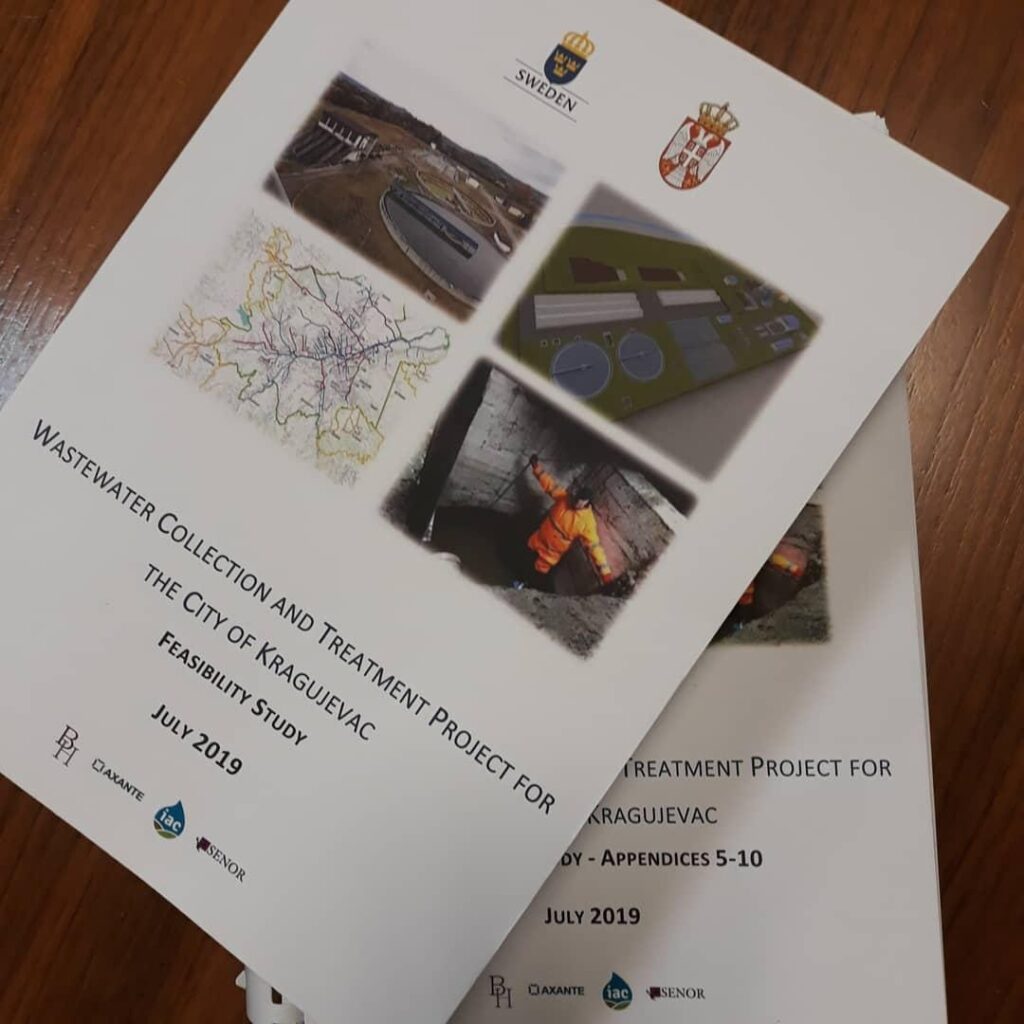
EISP2 provides the Ministry with investment planning support based on shared practical experience of environmental infrastructure implementation. For example, the team developed the Kragujevac Wastewater Collection and Treatment Project EU/IFI Feasibility Study. This 170,000 p.e. project was an opportunity to develop national policy regarding the rehabilitation or new build for existing, but out-dated, wastewater facilities. On balance, new build was agreed but only after extensive options analysis and consultation at local and national level.

Capacity Building

The core of EISP2 is enabling the national institutions to manage more projects (increased capacity) across a wider range of activities (increased capability).
The Serbian Ministry of an Environmental Protection, with DPM as the accredited EU DIS unit has a rapidly evolving role in EU negotiations and accession. To be able to cover all the new responsibilities as well as the pre-existing ones requires responsive, flexible and capable technical support. The BH-led consortium with Swedish funding does that. EISP2 provides on-the-job mentoring, analysis and planning, tailored trainings, off-site qualifications, templates, tools and study trips.

Got questions?

Laoreet scelerisque euismod egestas suspendisse aliquet amet ultrices faucibus mauris sit odio. Mattis morbi suspendisse mus ut pellentesque at pulvinar. Interdum justo